 ChickenPet
 Chimkindex
 Random chicken
 Chickrew
 Search
 Forums
 Information
 Announcements
> > > What is a Nightlight?

darkroom lighting. Originally made as a solution to both nighttime anxiety and the
need for comfort of a friend, they have recently expanded to local businesses, late
festivals, and evening vendors. Clubs won't ever risk being boring again with these
clucks livening up the cages. Taking one camping with you is considered one of the
top five best choices you could make for your survival. With training and
ethical housing, Nightlights can be your perfect companion!
(and emergency food source)
. . .
Their appearance, depending on the pattern, can appear reminiscent of strobes, discos,
and even soothing room lamps, which is where their namesake originates from.


> > > What Makes a Nightlight Different?

Tumblr Black or Sable Base
Basic Eyespot
White Peep
Flairs: Olive Overcast Grey Ash Silver Mist
White is special!
Tumblr Black and Sable can also be acceptable, but not 'true'
No's
Overs must not be the same as Flairs (no XYYs)
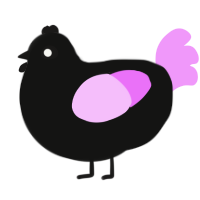
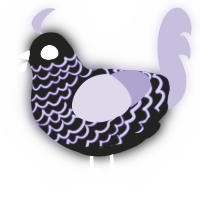
Patterns tell you what job your Nightlight was bred for. The Original Nightlight design is Head, intended for singular room lighting and general use from sirens to bathroom fluorescence. The first Nightlights were made as children's bedside lamps, but have now expanded their criteria. The antiques of this pattern are now known as the Nightnight variant and are considered quite rare.
Lace: Inductor coils, good for big jobs/industry -> Double Lace means double-time work and are largely used for events such as music festivals, requiring high energy but low overall use to prevent burn-out.
Bar/Half-bar: LEDs
Speckle: Reflective or low energy sources such as disco balls or handmade light projects.
None, Half-Lace, Neck-bar and Neck-speckle are all lighting designs exclusively bred for preference and do not have special value different from one another, only in how the light scatters from their 'blueprint' (their parents).



> > > Subbreed: Discoes

offer, no matter the era of its prime. They offer historical knowledge on top of all the
perks regular Nightlights offer. Having one is said to be good luck for your business,
especially if it's related to the arts. Even architecture! They will wander out
on Fridays though. Don't ask where they're going.
. . .
Discoes are recognized by their Puff Comb. Unlike regular Nightlights, they can have
ANY Flair, and they MUST have Cheek Eyespot.
Note: If a chicken does not have a Puff and has Cheek Eyespot, it's not a Nightlight.
However, if it has a Puff and has Basic Eyespot, it may be considered a Nightlight.
> > > Subbreed: Bangers

Ahem. These Nightlights can be found in the most peculiar of places. Opposite to the
Discoes, Bangers often prefer either the largest mosh pits or the most unheard of
theme bars with local openers, tucked away down alleys and in old bomb shelter
basements. They are a street-wise culture with rich experiences to offer you if you're
willing to trust them when they say to bring all your rings and your mace.
. . .
Bangers are recognized by their Mop Comb. Unlike regular Nightlights, they can have
ANY Flair, and they MUST have Cheek Eyespot.
Note: If a chicken does not have a Mop and has Cheek Eyespot, it's not a Nightlight.
However, if it has a Mop and has Basic Eyespot, it may be considered a Nightlight.
> > > Subbreed: Blackouts

own that the chicken might actually go blind, the light in their eyes fizzling out to
a completely black void. Never fear though. These chickens navigate their jobs by
echolocation, using the noise around them to guide others. They can most commonly
be found at raves and any high volume establishments and events. They are the
second brightest to White Flair Nightlights as a whole.
. . .
Blackouts are recognized by their Black Peep and eyeburner Over/Flair combinations.
Unlike regular Nightlights, they must have bright-range Over and complimentary Flair,
and they MUST have Basic Eyespot.
Note: Complimentary Flair examples are blue/orange, pink/green, purple/yellow,
warm/cool. Additionally, if one is born with a white peep, they are considered
a sub-subspecies. They are very rare lore wise and usually go blind with age,
or turn into a wizard (see White Flairs).
> > > Subbreed: Nightnights

most forgotten due to the amount of work put into them undersold by their simple
look. Despite their engineering, their color coordination proved too involved for
sustainable production, and the Nightlights were streamlined. However, there are
still many who search for purpose, often in a child's room, watching over their terrors.
. . .
Nightnights are recognized by their Head Pattern and Flair-Over coordination.
Unlike regular Nightlights, instead of the Flair being lighter than the Base,
Flairs are matched to their Overs and required to be a compliment darker shade.
Another example can be found above in the middle of the three chicken line-up.
A: They are usually called Fireflies or Twinkles!
Q: I have an XXY/XYY/XXX. Can they be considered a Nightlight?
A: It depends on if they follow the above guidelines. Generally speaking, Nightlights are intended to bring more value to XYZs in a coordinated effort that's pleasing to most players in order to prevent market saturations.
Q: I have a chicken that can be considered a Nightlight. Can I use the title to advertise despite not breeding for it or it coming from an original lineage?
A: You absolutely can and it will help others find breeding stock more easily for their own projects with these guys!
Q: I feel my particular Nightlight project can be considered a species/aesthetic by itself (eg. 'Fireflies' with only eyeburner Speckle Pattern), can I use my own conventions or have you add a new subspecies?
A: You can absolutely use your own conventions and make it your 'brand' of Nightlight! Due to the amount of folks who see different things in different patterns (for instance, Speckle can also look like disco ball reflections), I want to keep the breed page itself a bit tidy and stick with broad generalizations with colors mostly, so I would not be adding every little one. However, the Forum Hub will have a place to list everyone's individual brands if they'd like.
Q: Do I need to credit anything when using the Nightlight title?
A: Please link this page and the future forum hub in your chicken's bio so others can find out what it means! This will be the best way to spread word.
Q: Are you expecting to take full credit for this idea and only claim these combinations for yourself to create a market that tries to benefit you the most?
A: No. Plain and simple. This is just a fun project I want to share with everyone who really likes playing with color effects! I want everyone to use them for their own reasons, develop their own stories, and enjoy them in their unique way even if it's not at all what I intended for my personal stock.